Tuesday, November 30, 2010

Giving this Season Could Improve Your Happiness as Well as Help People in Need

As we enter the gift giving season it may be a good idea to visit sites like Oxfam America and UNICEF which allows you to send a new kind of gift card--with a photo of a donkey or a goat
on it that you have donated in the person's name to a village on the other side of the world. This seems a neat idea--give a sheep for $50 instead of buying a sheerling coat that if you were honest you don't really need. As the Oxfam America item description reads:

"Raising these fleecy critters allows women to create their own income. What's more, the sheep's wool is used to make local textiles. When you give this gift, you know it's helping others, so there's no need to count sheep—you're sure to sleep well!"
It is a clever idea that Oxfam America has hit on and it does make it tempting when you can also make the donation tax deductible.
UNICEF Winter Survival Pack
If sheep are not in your thoughts this year perhaps a "Winter Survival Pack" would be more to your liking, for $81 dollars  ($30 or so more than the sheep)  UNICEF will buy
" a girl or boy with the supplies they most need to survive the next 6 months:
Micronutrient powders that help a child on the brink of malnutrition get the vitamins and minerals that are most essential for them to grow up healthy. Immunizations from measles and polio that will save a child from two of the most common and painful diseases in the developing world. Water purification tablets to filter out dirt and bacteria from water so that children can drink without fear of getting sick. Your pack contains enough tablets to clean 50,000 liters of water!"

Something to think about this holiday season as we wander the malls with no idea of what we need to buy for the person who has it would seem everything when compared to the desperate people who reside on our planet! Research supports a more giving attitude--studies "reveal that personal spending had no link with a person's happiness, while spending on others and charity was significantly related to a boost in happiness."  According to one reference to a  study published in no less a journal than Science--"In a representative survey of 630 Americans..regardless of how much income each person made..those who spent money on others reported greater happiness, while those who spent more on themselves did not."  In a separate study of 13 employees at a Boston-based firm, the researchers found that employees who devoted more of their profit-sharing bonus (which ranged from $3,000 to $8,000) to others reported greater overall happiness than those who spent the windfall on their own needs." Something to think about as you are out in the malls this year. How about a sheep and a gift card instead of that tie/gadget or other thing you have plenty of?

Monday, November 22, 2010

Reflecting on the Global Happiness Index Stimulated by a great TED lecture

TED talks occupy a distinctive place in the world of ideas between the best kind of well argued op ed article, and the lively and interesting lecture. At their best they engage their audiences as few of those latter two formats can when they reveal a lecturer who is both passionate about the ideas he or she presents and able to compress the key ideas into a lively 18 minutes. Rarely do the best of these presenters use video aids and seldom Power Point--they use instead old fashioned human powers of communication. In 18 minutes, you cannot afford to pad out your ideas or condescend, you must energize and sometimes inspire your audience with the power of your words. The format proves awfully good at busting through the heavy fog of the conventional wisdom.

The best at the game are deeply knowledgeable about their fields and use skillfully chosen examples that connect with their audience and many of the best are not traditional academics, they are simply engaged people who through dint of their passion have made their ideas count.

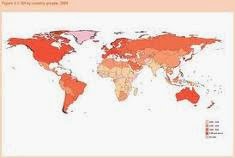
Take the one I heard the other day by Nick Marks, he is a UK statistician the founder of the Centre for Well-Being, an independent think tank at the New Economics Foundation (NEF), in London. Marks asks the simple question as to why we are so obsessed with measuring a country's success through measures of economic growth rather than measures of happiness. He has developed something called the Happy Planet Index which shows the relationship between national well being and the amounts of resource it takes to be happy. In the US we take a lot of the word's resources but seem no happier as we consuming 25% of the worlds oil for just 2% of the world's population. The surprise is to find the country that is at the top of the league tables for happines is of all places, Costa Rica which abolished its military in 1949 and has a very broad social safety net for its citizens. Living in a country that seems bent on increasing the gap between the ones with the "have more than enough" and those struggling on the margins in the US and in developing countries this maybe a good time, as Nick Kristoff urges us, to rethink the US model that is leading us inexorably towards a banana state republic. Do the super rich really want to live in a banana republic? Surrounded by high walls, security guards and armored vehicles? As Warren Buffett points out he pays less percentage wise in taxes than his secretarial assistants. Is that their idea of happiness? Why they keep pressuring their Republican benefactors for more tax cuts is beyond me does sheer greed now control them? Maybe this TED talk can inspire them to change their misguided ways--enjoy!


Tuesday, November 9, 2010

Russian Politics Takes Another Brutal Turn: Perhaps YouTube Will Now Improve the Chances that Global Outrage will be Heard

In what must surely be one of the most outrageous attempts to use Twitter to conceal  a guilty conscience, the Russian President Dmitry Medvedev according to a report in the Washington Post "tweeted Saturday, shortly after the beating happened, that the criminals must be found. " I am referring of course to the savage beating of Oleg Kashin who made the "mistake" of  writing things on his blog that allegedly "upset the governor of Pskov and controversial youth movements." The Post reporter somewhat unhelpfully does not provide many details but other news sources like NPR are willing to name the reason that Kashin opposed the construction of a road that was clearly going to be lucrative to some interests.  The Post in a sharply worded editorial points out that "the highway near Moscow, for example, is being financed by a crony of Prime Minister Vladimir Putin, Mr. Medvedev's de facto superior. Mr. Kashin's reporting about the road was attacked on the Web site of a Kremlin-sponsored youth movement, which declared that "Journalist-traitors need to be punished!"


 NPR reports "Road construction is considered one of the most corrupt sectors in Russia, offering huge profits to the businesses and officials involved who may see the journalists and activists as a direct threat to their bank accounts." NPR is also reports that Kashin is the second journalist to be beaten up in two days, police were also investigating an  attack on Anatoly Adamchuk "by two men outside his weekly newspaper office early Monday. Adamchuk was hospitalized with a concussion, a colleague wrote on the website of the paper, Zhukovskiye Vesti." Admachuks' newspaper also had the nerve to publish critical reports on the highway project.


What is clear is that  a staggering 32 Russian journalists have been murdered since 1993 and more than 30 attacked this year and until this beating was caught on YouTube the public has seeemed to accept the horror. Part of the reason for the seeming equanimity seems to be indifference perhaps bred of years of civil rights and humanitarian abuses that were part and parcel of life in the old Soviet Union. Another factor is the low esteem in which journalists even those as brave as the ones who gave their life are held in Russia; as Andrei Richter, a journalism professor and director of the Institute of Media and Law states  "The public doesn't view them as watchdogs of government but as people selling stories." Richter goes onto comment that  "attacks against journalists are not even classified as major crimes.. Rather than attempted murder, the charge is hooliganism, which carries a much lighter sentence." Now some real outrage seems about to erupt. Let us hope. It is too late now for the 32 and more journalists who were murdered but only continued public pressure will prevent more brutalities. That pressure must continue to demand that the high placed criminals be brought to justice  Let us hope that the US administration which hungers after Russia's approval (so they can continue to support sanctions against Iran )will not continue to ignore such incidents.  In the meantime   (as we pray for Kashin's speedy recovery) we might reflect on the words of Martin Niemöller the German protestant priest who spoke up against Nazism:


When the Nazis came for the communists,
I remained silent;
I was not a communist.
When they locked up the social democrats,
I remained silent;
I was not a social democrat.
When they came for the trade unionists,
I did not speak out;
I was not a trade unionist.
When they came for the Jews,
I remained silent;
I wasn't a Jew.
When they came for me,
there was no one left to speak out

Thursday, November 4, 2010

Obama as Educator in Chief: Reflecting on the President's Mid Term Report:

An American President wears many hats--from cheerleader to commander in chief to substitute head of state, head of the Democratic party and also (by the way) leader of the free world. The list of roles is somewhat mind boggling and it is no wonder that the protean nature of the office leads to much glamorization by the world's media and a multitude of mostly bad Hollywood movies.  The role  President Obama seems to have played the most during his first two years in office was as chief legislative maverick with the roles of comforter in chief that FDR played so successfully and the role of pragmatic visionary that President Clinton played during his first term in office much in abeyance. Clearly the times called for some energy to be spent framing legislation and making the necessary deals whether it was to frame a credible stimulus bill while continuing to bail out the banks, developing a set of  sanctions that would hold up in the UN against Iran, working on energy legislation so he could support a progressive position on global warming at the Copenhagen global warming summit meeting, relaunching the Middle East peace talks, rescuing the Detroit auto industry, reconfiguring the strategy in Afghanistan and getting health care and financial reform passed, not to mention dealing with the BP oil leak crisis in the Gulf. There was no escaping the daily grind of figuring out where the proverbial votes, the incessant travel and the calls that needed to be taken from foreign leaders. He was more than busy and so not he had not much room for deeper reflections as to how this change was going down with Americans, many of whom were losing jobs and homes and a way of life they had learned to take for granted. During this period of intense work it is not surprising that Obama that had such a fine ear for the country's mood during his election campaign began to seem disconnected from the people who helped put him in office. It showed up first in his disappointingly vague and fragmented State of the Union speech and then later in more routine phone it in speeches and more obviously when he got off to a bad start as talked about the BP Oil spill and made few clear references to where he stood on key provisions in the health care bill. There were only routine statements that seemed to show his concern about the unemployed and his miserable lack of action concerning the hundreds of thousands of foreclosures while seeming to be content with only lukewarm measures against Wall Street's culture of excess. Perhaps we were asking too much--the task to govern a country that had fallen into such bad shape as the one that Obama found when he took office was too much for anyone--short perhaps of another FDR to successfully manage.

Slowly over this two year period, the largely young and optimistic electorate that had voted him in sensed during this time a disconnect between the man they thought they had voted for--fearless champion of the ordinary guy who would "fight" for them, sensed a feeling of betrayal and refused to come out in these mid terms in the numbers they had two years before. Now he faces not just a base that feels alienated from what might be called the "2008 Obama project" but a fiercely partisan attack from a far right wing group, that wants to channel the anger that unemployment and broken dreams can cause into a campaign to stop any progressive agenda from seeing the light and  simply wishes to kill Obama's re-election chances in 2012. The tea-party largely middle aged and white has begun to read the US Constitution in mystical ways as a justification for a limited form of federal government that pays only for the defense and their medical and social security benefits and leaves the rest to market forces. The federal governments' historic role in addressing what markets and states have failed to do over the years, that is to address issues of inequality, to repair gaps in the educational system and regulate commerce among other things is viewed as bordering on unamerican and unconstitutional. We are at a sad impasse in terms of the debate when an individual like Sarah Palin, putative leader of the Tea Party movement, who is so fiercely proud of her anti-intellectualism,  can claim some political legitimacy and even be considered as a future presidential candidate.

The festering of large segments of the American right into a quasi religious group of zealots who want to turn their backs on the modern world, on all the pressing forces of globalization and burrow deep into a world of fantasy is not good news for a country that hopes to maintain leadership in the 21st century. Whether any of the scale and size of the backlash against perceived Obama's over-reaching could have been avoided if the President had managed to find his governing rather than his campaigning voice is open to speculation. But as all this slips into the past we need to focus on what Obama should do in the last two years of his Presidency. Among the many roles he could choose to play and fate and events will allow him to play he should consider the one of Educator in Chief. He needs to explain to the electorate both his own side and the majority of independents who during this last election season swayed towards the Republican side, what the choices are in plain and simple terms.  Obama needs to be the educator-in-chief leading a national discussion as serious as the Lincoln Douglas debates about slavery, concerning the US place in the modern world. Within that theme we can debate what is the right role for the US government  to play at home and abroad (given the close of the cold war and the rise of terrorism--it makes no sense that we fund so many aircraft carriers and jet fighters when the threat is mostly coming from failed and failing states like Afghanistan, Pakistan and Iran) what is the right size of the federal government, a discussion about how large deficits can be in the middle of recession as well as  the dangers of making that recession worse by cutting the spending of the only entity that can spend during a recession, and what is the future of trade policy when so many areas in the middle west (many of which voted Republican in sheer frustration this recession) have been devastated. What do 21st century jobs look like, what does an energy policy look like that reduces green house gases, makes us less dependent on foreign oil and helps American exports, what kinds of investments in green energy and education do we need to make if we are to secure them? Many of the Tea-party candidates who will be going to Washington this January to be sworn into office will only have a dim idea of many of these issues, and need to be woken up so they don't end up during their time in Congress simply reciting demagogic talking points. Why does Obama need to lead this effort? For the simple reason that the media has no real staying power when it comes to following these issues or seriously educating anyone about them since they are now convinced that kind of programming is reserved for C-Span while they trade in sound bites by a partisan punditocracy. If the President were to lead a series of town hall debates where opponents of his policy could come forward and be heard and where there would be an agreement to have follow up on the areas where compromise is possible--the American public if not a more global audience would be riveted. The priority should be on making the core ideas related to our 21st century world as clear as glass to everyone and why he wants to take the country in the direction he does based on his analysis of that world. In this way those who seek to use these times to scare and confuse people are marginalized and we use all our modern technology not to keep "amusing ourselves to death" as Neil Postman once memorably put it, but to learn from our fellow human beings who after all share our planet.  The President's men would turn this role down I am reasonably sure, fearing he would be satirized as Professor in Chief and the anti-intellectual crowds will portray him as an ivy league elitist. The danger exists. The way to counter that danger is first for Obama to do what too many professors often fail to do, make the ideas concrete and clear and provide good examples, to be talking and discussing these ideas not just with academics but with managers, workers, technical experts and the like, secondly to be seen to be willing to use his energy and intellect to work with the opposition to forge compromise positions. If he finds he cannot afford to compromise he must then clearly explain why. What is the alternative? Does Obama or his advisers think for one second that by compromising with the Republican on their sacred cows such as tax cuts that he can find a way to get re-elected? He must also know they intend to block every piece of legislation however constructive and thoughtful it might be and use his failure to pass legislation as yet another reason to vote him out in 2012. The President cannot  truly draw out the venom of the attack by the right wing or its  overwhelming negativity out by failing to engage. He must assert the new role, own it and as he does make more of us understand that politics is not some other version of show business played as they say by ugly people, not a game but a serious effort to define who we are now as a people and into the future.

Friday, October 29, 2010

Google Tax Avoidance and Global Responsibility

So Google avoids US and UK taxes among a host of other countries that it shorted--what a shocker! The company that has the motto "do no evil" has managed to pay only a fraction of the tax it owes. In the US it comes to about $3.1 billion the company has avoided and in the UK the amount is estimated to be more than a £100m. This practice of shipping money off-shore is common among the multi-nationals that feel they owe their shareholders the responsibility of maximizing profits ahead of tax obligations to any individual countries. The effective tax rate Google paid was 2.4 percent rather than the average of 20-25 percent that was really due. If we all enjoyed that rate what fun life would be. As Tapped, American Prospects' blog states

"It did so not just by taking advantage of tax breaks available to corporations for research and development, depreciation and the like, but also by more dubious techniques known as the "Double Irish" and the "Dutch Sandwich" -- “the sandwich leaves no tax behind to taste." These tactics involve shuttling earnings through various foreign subsidiaries with no business purpose other than tax evasion.

The American Prospect asks whether this action was "evil" and answers as follows:

"If Google's definition of not being evil is 'doing more than the average corporation to support the public interest,' then sure it is. It's one thing to take advantage of legitimate tax law, but exploiting these loopholes for the sole purpose of paying less tax violates the spirit of the law, if not the letter. That would be fine if Google was content as a typical business, relentlessly pursuing profit with no thought to the public interest. They simply shouldn't pretend they're somehow better than the Exxons and Goldman Sachs of the world."

The issue is symbolic of the uneasy relationship that exists between powerful multinational corporations and sovereign governments. As governments lose power and global corporations gain it becomes difficult for any single governmental entity to control their excesses. As Steve Pearlstein notes in today's Washington Post only a few days before:

"President Obama made an offer that no one in the business community seems to have picked up on. The "anti-business" president said he supported the idea of reducing the corporate tax rate to a more globally competitive level - 25 percent is the number frequently mentioned - but only as part of a package that tightened rules on inter-company transfers and eliminated enough corporate tax breaks so that there was no overall reduction in revenues or increase in the federal deficit."

Despite some bipartisan support there chances that this will occur are slim as Pearlstein notes reducing the rate down even by a few percentage points will  not win the support of companies as large as Google since their dodges are extremely lucrative;

"Right now, it's big global companies like Google that have the most to lose if rules are tightened and tax breaks eliminated, while smaller domestic firms would gain most from a reduction in the rate. Similarly, companies in the insurance, pharmaceutical and energy sectors probably benefit disproportionately from existing tax breaks that do little for profitable companies in retail, distribution, manufacturing and business services. If history is any guide, the odds are that certain losers will out-shout and out-lobby the potential winners.The conventional wisdom is that it will take presidential leadership to reform the tax code and balance the budget, but the reality is that it will require the support of the business community. Up to now, the refrain from the corporate sector has been almost exclusively, "What's good for business is good for America." Are there no leaders left in the boardroom who still believe it works the other way around?"

We badly need an informed debate about the role of global corporations which might lead to a code of ethical behavior that can be monitored carefully based on transparent information. The media at the moment show very little interest in this issue, this maybe due to the fact that so many of the large ones are owned by business conglomerates that are well versed in the tax dodges themselves.

Wednesday, October 13, 2010

Chilean Miners--A Global Opportunity to Unite?

One amazing thing about the brave Chilean miners rescue drama was that if you turned on US TV last night and this morning you would see uninterrupted coverage of one miner after another emerging sunglassed  from their hellish underground location to be greeted by his overjoyed family. For the US to give up “regularly scheduled programming” for anything let alone a foreign mine disaster for such an extended period is highly unusual and worthy of some comment. When we taken into account that a 1,000 strong press corps is situated at the mine representing over 30 countries we seem to have approached a McLuhanesque global village moment. .The last time something like this happened was possibly the Moon landing. What made this event so important not just for a headline or two but for continuous TV coverage? The human story of course which transcends borders–there was no thought of rescue of anyone for 17 days before the famous note was found written in Spanish in red ink, it read simply: "The 33 of us are fine in the shelter."


But there was also another story to be told about the international cooperation that went into the rescue as the LA Times reports:


“Twenty private mining companies from around the world — usually rivals — coordinated efforts to penetrate the rock, loaning equipment and personnel; the state-run mining company fashioned a telephone system through a second probe hole. The U.S. National Aeronautics and Space Administration sent a team to Chile to share expertise about the psychological and physical toll of living in cramped quarters, and when the miners exercise — to be rescued, they must fit into a capsule called the Phoenix, whose diameter is less than two feet — they wear gear that is standard for astronauts and which monitors their heart, lung and other functions. When they are finally brought out into the light they will wear special sunglasses provided by Oakley, based in Orange County..”

We also learn that “long-time enemies Bolivia and Chile are cooperating to support Bolivian miner Carlos Mamani, 23, and Bolivia's leftist President Evo Morales is expected to greet the newly freed miners along with Chile's conservative President Sebastian Piñera..”

It is also reported that “work crews have raised the flags of Canada, the US, and Argentina, among others. Palestinian ambassador Mai Al Kaila visited the site, adding her flag to the collection.”

So let peace light and global cooperation spread ! Perhaps this incident will lead to globally recognized standards concerning mine maintenance and worker safety so that future incidents (most sadly the recent tragedy in  West Virginia) can be avoided.


.

Thursday, September 23, 2010

The UN Millenium Development Goals 10 Year Anniversary: Time for a Reassessment

There is plenty of comment at this time on the 10th anniversary of the UN Millenium Goals. There are this week lots of questions –were they too ambitious, too vague with too many countries willing to make rash promises of large amounts of cash for the developing world and not having much intention of delivering?

Does the entire process have to be re-thought so that it is more transparent and accountable? For example the Financial Times criticizes the Millenium Development Goals for being unrealistic

“Achieving universal primary education and halving the proportion of hungry people in 1990 was a daunting, if not impossible, task.”

Jeffrey Sachs avers that the system is “broken” and needs to be rethought.

“we must replace the fragmentation of bilateral programmes with a new strategy based on multi-donor pooled funding that has clear timelines, objectives and accountability.”

Bono a well known celebrity fighter for these goals (that he refers to as MDG) writing in the New York Times,  thinks the record is better than Sachs and others are prepared to make out,

“Tens of millions more kids are in school thanks to debt cancellation. Millions of lives have been saved through the battle against preventable disease, thanks especially to the Global Fund to Fight AIDS, Tuberculosis and Malaria. Apart from fallout from the market meltdown, economic growth in Africa has been gathering pace — over 5 percent per year in the decade ending in 2009. Poverty declined by 1 percent a year from 1999 to 2005.”


Bono however, agrees with Sachs however that there is a greater need for transparency,

“Right now it’s near impossible to keep track. Walk (if you dare) into M.D.G. World and you will encounter a dizzying array of vague financing and policy commitments on critical issues, from maternal mortality to agricultural development. You come across a load of bureau-babble that too often is used to hide double counting, or mask double standards. This is the stuff that feeds the cynics.”

He recommends the creation of an independent unit “made up of people from governments, the private sector and civil society — to track pledges and progress, not just on aid but also on trade, governance, investment. It’s essential for the credibility of the United Nations, the M.D.G.’s, and all who work toward them.”

As the major western donors struggle with recession –a clear need is to help explain to the people why we need to care about these goals. Goals that did start out in 2000 as quite simple and obvious such as Goal 1 to eradicate poverty


Target 1:

Halve, between 1990 and 2015, the proportion of people whose income is less than $1 a day of poverty had diminished in almost every region


Target 2:

Achieve full and productive employment and decent work for all, including women and young people


Target 3:

Halve, between 1990 and 2015, the proportion of people who suffer from hunger


Contrary to what Bono claims the data is not "impossible track"--the  UN data is pretty good in showing you the progress towards the goals through such items as interactive maps that show the passage of time regarding key indicators such as the number of people in the world who are living on $1 dollar a day in 2010 compared to 2000 when the MDG were first established:


But Obama is right the information is scattershot and not clearly presented so that a voter could see where his or her money went to what program and with what result. 
Another part of the  problem, perhaps a more important one,  seems to be the media’s difficulty in reporting on long term stories. The TV news is much happier with reporting dramatic incidents and accidents than offering stories that require the perspective of time. When the politicians announce a the famous summits whether it be at “Monterrey in 2002 (to reach 0.7 per cent of GNP in development aid), Gleneagles in 2005 (to double African aid by 2010), L’Aquila in 2009 (to direct $22bn over three years to raise productivity of smallholder farming) and Copenhagen in 2009 (to add $30bn over three years for climate change adaptation and mitigation)” it captures the TV headlines but does not register. Nor does the story of why what these seemingly vast sums mean in terms of real change on the ground—better nutrition, less disease and how these amounts we are spending which are bare fractions of our GDP compare to the extent of the problem. President Obama clearly had in mind the country’s mood, to steer towards less foreign entanglements and less intervention, when he made his remarks before the UN General Assembly the other day concerning the MDG , 'With our economies struggling, so many people out of work, and so many families barely getting by, why a summit on development?' " Obama told an audience of several hundred people in the U.N. General Assembly hall. "The answer is simple. In our global economy, progress in even the poorest countries can advance the prosperity and security of people far beyond their borders, including my fellow Americans."

President Obama is right of course to frame the debate that way if it means gaining the support of the US Congress during a time of national austerity –but the media has to be able to help shape the story and tell the positive stories about International AID such as the Global Fund to Fight Aids, TB and Malaria, which argues Sachs is a better model than the MDG offers because it “pools resources from many donor nations, with an independent review board approving national programmes according to scientific and management criteria rather than bilateral politics. Educators must do their part too to keep up and explain the story that too many of our leaders and our media have failed to illuminate.