Tuesday, March 8, 2011
Exploding Narratives -We Need to Learn the Lessons from the Latest Middle East Crisis
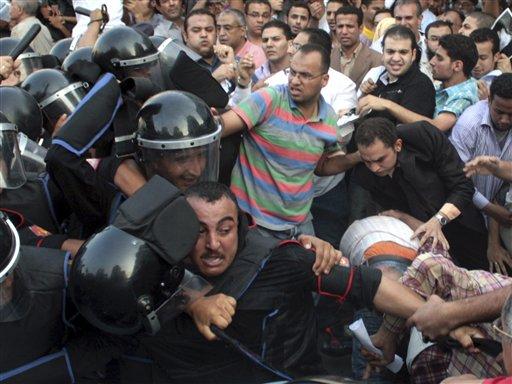
Many commentators have made several points concerning how limited our perspective on the Middle East has been prior to the recent uprisings. As far as some were concerned it was all about the Israeli-Palestinian conflict and the rise of Iran as a menace in the region. Of course there was more to the story but since journalists were not provided easy access in the countries that are exploding we now know differently-- the question that was not really on the table to answer was the brutal scale of the repression that existed in countries like Egypt as well as Libya along with many other so called "moderate regimes." What was also largely hidden from public view is the way western governments particularly those of the US and the UK and out of office leaders were all too willing to make deals with tyrants and brutal dictators to preserve these cruel regimes and more painfully for self gain. This was a massively under-reported story. Now the media feel free to spill the beans, or at least some of the more palatable ones. Some recent examples include:
o Philip Stephens writing in the Financial Times makes the point it was one thing for Tony Blair to want to encourage Col. Gaddafi to join the fold of nations that did not want to trade with terrorists etc etc., it was quite another for Blair to go cap in hand to represent UK arms companies in Libya to scoop up some lucrative deals.
o The case of the departing London School of Economics (LSE) Director who had to resign--having been caught out by his energetic efforts to take donations from anyone it would seem with a checkbook and a desire to wash their reputations clean is another example of this ethical grey zone behavior.
And Nick Cohen writing in The Guardian starts off provocatively by stating that "The Arab revolution is consigning skip-loads of articles, books and speeches about the Middle East to the dustbin of history. In a few months, readers will go through libraries or newspaper archives and wonder how so many who claimed expert knowledge could have turned their eyes from tyranny and its consequences. To a generation of politically active if not morally consistent campaigners, the Middle East has meant Israel and only Israel. In theory, they should have been able to stick by universal principles and support a just settlement for the Palestinians while opposing the dictators who kept Arabs subjugated.
The right has been no better than the liberal-left in its Jewish obsessions. The briefest reading of Conservative newspapers shows that at all times their first concern about political changes in the Middle East is how they affect Israel. For both sides, the lives of hundreds of millions of Arabs, Berbers and Kurds who were not involved in the conflict could be forgotten..:
• Gaddafi was so frightened of a coup that he kept the Libyan army small and ill-equipped and hired mercenaries and paramilitary "special forces" he could count on to slaughter the civilian population when required.
• Leila Ben Ali, the wife of the Tunisian president, was a preposterously extravagant figure, who all but begged foreign correspondents to write about her rapacious pursuit of wealth. Only when Tunisians rose up did journalists stir themselves to tell their readers how she had pushed the populace to revolt by combining the least appealing traits of Imelda Marcos and Marie-Antoinette."
We also learn from Dominic Kennedy writing in the Sunday Times that one powerful source for the boycott of Israel came from the influence peddling Libya was able to exert through their contacts with the LSE. If the allegations are proved it will another blow for the reputation of the LSE.
These stories can come out now and only just because Stephens (see above FT article) argues the all encompassing power of Britains' antiquated libel laws has to take much of the responsibility for the failure of the British media to go after those who would aide and abet brutally repress their own people.
"The media has been muzzled. To dig deep into the dealings of peripatetic billionaires and foreign despots is to invite instant legal challenge. The (libel) law demands journalists provide absolute proof of dubious dealings. That’s hard to find in the wild west of the former Soviet Union or the closed world of Middle Eastern autocrats. So, in spite of the occasional bouts of indignation, Britain shrugs its shoulders and gets on with the washing. Depressing really. Then again, it pays well."
The problem with Stephens' argument is that the US and the western press in general felt no real compunction to tell the truth either. Anne Applebaum reciting a similar sorry saga in Slate recounts a similar sorry saga of the rich and near rich like Prince Andrew, Blair and a whole host of the aspiring super lawyers and lobbyists on both sides of the Atlantic and makes an effort to draw out the lesson. Applebaum's piece is worth reading in its entiriety as it dares to name names and recounts in some graphic detail who dined and groveled at the knees of despiscable people like Gaddafi's son,
"If Western governments want to have any credibility at all in the post-revolutionary Arab world, they need to stop hiring people, even as "envoys," who are already in the pay of current or former Arab dictators. Blair should resign immediately from his role as an informal negotiator in the Middle East; Prince Andrew should be told to stay home. The Wisners of the world should be sent back into retirement. Finally, for good measure, the legions of former public officials now in the pay of Chinese, Russian, or Saudi businessmen should be kept far away from their previous places of employment, just in case. Come the revolution, you can be sure they will turn out to have embarrassing friends, too."
Plenty to ponder here about the relationship of powerful leaders, staggering personal wealth and the political and media elite. None of this items taken individually shocks but collectively it adds up to a disturbing picture. We have always had a set of hypocritical western leaders and their hacks who are all too ready to cash in their influence and sell out to the highest bidder. It is the lack of media interest in all this that is truly disturbing. Is it that the popular media has caved into cynicism? The disastrous nature of media monopolies and their role in framing news stories that support only certain narratives that are commonly pedaled, pundit supported and while not always inaccurate leave too much out so much in fact that we are left with half truths and a deeply distorted global picture. How do teachers correct for this?
Certainly by acknowledging the notion of how story framing works and how while it is convenient for editors to run with known frames and narratives -- they need to check-in with reality once in a while--because once in a while if you don't --well need I say more...This is not all bad--certainly for journalists..refreshing in fact--but maybe not so good for the rest of us and clearly not a good basis on which to frame long term foreign policy decisions. We could prepare better for all this if as Thomas Friedman so brilliantly said in a recent column. "we had not built our house at the bottom of a volcano!"
Labels:
Autocrats,
Egypt,
Lawyers,
Libya,
Lobbyists,
Middle East,
Narratives,
Tony Blair
Wednesday, March 2, 2011
Tiger Mothers and the Debate about Our Future
I have followed the Tiger Mother debate with some interest. Since reading the article in the Wall Street Journal I have been discussing the article with a wide range of people including family members. Yes Chua is correct regarding the key point that you cannot enjoy a discipline such as being a musician until you really master it--and it is too easy to give up because getting to that mastery level takes an enormous amount of work and yes American parents in particular maybe a little too quick to say OK--as they multi-task to cope with the increasingly frenetic pace of life.
But the key issue as one writer points out in her "Tiger Mothers and Superficial Scholars" blog is what kind of spark and inspiration you can provide the student to want to practice and come out of the end of the experience with something fresh and illuminating to express. If a student is forced to do something because love might be instantly withdrawn that as Pardoe persuasively argues in her blog is an unacceptable emotional abuse. What Chua asks us to believe is that kind of abuse produces musicians etc, and well it might develop a few who can survive that type of treatment--but what is more likely is that the majority who now will be even more subject to those kinds of regimes will have to pay the price of forever struggling to find their true voice (think why the "King's Speech" swept all those Oscars the other night--it was a universal story --in one way shape or form of human potential to express itself being damaged and thwarted) as they struggle constantly for approval and to conform to others expectations. The serious and often forgotten point about education is that it derives from the Latin word --"to lead out"--leading not forcing out--helping to structure experiences that nurture the desire to move out of confined spaces--and limited explanations. In this matter both cultures --(forgive the sweeping generalizations but you can't seem to play in this debate without the use of the those all encompassing constructs) may have something to learn. The American K-12 school culture seems caught now in a sort of "Tiger Mother Moment"--believing that only the knowledge that can be tested is worthwhile and focusing on that low level set of skills is the way we need to focus on a systemwide level. The Chinese as they look to the west for some of the ways that they can now begin to develop their own big global brand names (can you think of any one Chinese brand name that has any kind of global resonance?) want to do more to encourage the creativity and innovativeness of a Bill Gates and a Brin who made Microsoft and Google world wide names in the 80s and 90s respectively. These should not be idle speculations --the new knowledge economy --if we truly believe there is reality behind the rhetoric will come from thinkers who are not approval seekers and who have forged their own path--their own journey out--yes they mastered the basics, yes they were disciplined in their approach, but they had that spark to learn and grow at an astonshing rate on their terms in their way.
Labels:
Bill Gates,
China,
Gates,
Global Competiveness,
Google,
Innovation,
K-12,
Microsoft,
Schools,
Testing,
Tiger Moms,
Tiger Mothers
Tuesday, February 22, 2011
OK, We have a "Middle Eastern Teachable Moment"--Now What?
As events in Libya continue to explode and the Middle East as a region seems to beginning a phase of historical turmoil and change we may well reflect on how this all beginning to play out in the classroom. To answer the question as to how are teachers responding to all this we now have Education Week's most recent article "U.S. Teachers Find 'Teachable Moment' in Egyptian Protests" to turn to. While Michelle Anderson's piece is timely enough, it only provides us with a glimpse of what might be happening in classrooms across the US -- not yet a full enough pictureto draw any major conclusions. One theme seems to be the effort by teachers to connect the American revolution with the events in Egypt. The article makes us also very aware that the teaching of Middle East history is pretty sporadic. Anderson's reporting is also limited by the narrow range of quite privileged teachers she interviewed-- just those few who managed to attend a recent Harvard Forum with many who had had the additional benefit of having been widely traveled in the region. What most teachers seem to be doing was "connecting the uprising to historical events, such as the writing of the Declaration of Independence and the Boston Tea Party." These kinds of lessons as valuable as they are in connecting students to the current events are probably the kinds of lessons that are going on throughout the US--in one shape or form --related to of course grade level and subject--one would hope across thousands of classrooms in the US. What is clearly of more value is whether teachers are able to use the event to sustain an interest in the Middle East and help connect them to more issues. How to do that? There do not seem any clear pathways at the moment --but it would be a missed opportunity if we were not able to take the further everyone's clear fascination with seeing the revolutionary events unfold in such stark detail on their TV sets. That kind of thing does not happen as they say every day or every generation. Getting to those deeper issues related to sustainable pathways and understanding further how cultural and media issues affect our understanding is of course a more complicated challenge. On a more optimistic note the task, as Anderson is careful to note, is made easier by sites like Brown University's Choices Program with the goal to "make complex international issues understandable and meaningful to high school students." Interestingly their offerings are not defined by grade level or subject area--the approach is simple and clear--the heading is "Teaching with the News" and the site just provides a range of tools from a very simple graphic organizer that helps students just recall key points from the video and other materials supplied to more challenging assignments. What is interesting and could be a valuable research strategy is what teachers want to do with the more advanced materials supplied --there is one for example that provides a series of interesting photos from the demonstration. Just deconstructing one would be a valuable experience (take the one below for example from a collection organized as a PowerPoint slide show on the resource page referenced above):
I suggest you expand the size of the picture by clicking on it to get a better view.
It does not seem at first blush we need a lot of cultural information to interpret the picture or do we?
1. What is the the cultural meaning of a woman dressed in a hijab protesting the government--(as the wikipedia entry on hijab indicates, in the colonial struggles in the past the hijab was a symbol of resistance not as it is often interpreted today in non Arab countries an indication of female subjugation?) Is this woman telling us something by wearing a hijab ? If so what is that message?
2. From the way that the sign seems so spontaneous using the remnants of an old ripped cardboard box- written with haste--was it something she decided to do on the spur of the moment or was this a more planned type of communication?
3. To what extent is the fashionable western style purse that hangs from her shoulder a clue to her more affluent life style and aspirations?
4. What is the significance of those black gloves? The way the gloves appear stretched over her skin suggest that these gloves are made of latex does this offer any clues? Perhaps after all this is a deeply religious woman who wants to ensure that every part of her skin is covered? or is so unused to street life that she is afraid of being contaminated from touching this very ragged piece of cardboard?
5. Who are the signs for? For Western eyes clearly --but notice too how she stands apart from the crowd. By firmly holding her sign up she reinforces the idea that she is keen to be observed and is aware that she needs to provide a different message for both of the cardboard folds--as they appear at different angles as if she is posing for a particular aerial mounted camera.
Where can you go to get information to help with this activity --surely libraries and the internet can help--but a key source would be people--people from the country itself who can help us understand more completely how common it might be to have a woman in full hibja protest in public? What is the risk to her? How representative is she of all women in Egypt or just certain segments? Students must themselves become like journalists and try to ferret this information out. It is the type of research that lends itself to the Web 2.0 tools that I refer to in my book Global Education: Using Technology to Bring the World to Your Students. These types of explorations maybe as important as connecting US historical events because they engage learners and as they do sharpen their cultural, media and visual literacy.
It takes some effort to organize but not a huge amount and once you do it the first time you may never look back. Liberation (particularly from a way of doing business that no longer makes any sense) comes in many forms.
I suggest you expand the size of the picture by clicking on it to get a better view.
It does not seem at first blush we need a lot of cultural information to interpret the picture or do we?
1. What is the the cultural meaning of a woman dressed in a hijab protesting the government--(as the wikipedia entry on hijab indicates, in the colonial struggles in the past the hijab was a symbol of resistance not as it is often interpreted today in non Arab countries an indication of female subjugation?) Is this woman telling us something by wearing a hijab ? If so what is that message?
2. From the way that the sign seems so spontaneous using the remnants of an old ripped cardboard box- written with haste--was it something she decided to do on the spur of the moment or was this a more planned type of communication?
3. To what extent is the fashionable western style purse that hangs from her shoulder a clue to her more affluent life style and aspirations?
4. What is the significance of those black gloves? The way the gloves appear stretched over her skin suggest that these gloves are made of latex does this offer any clues? Perhaps after all this is a deeply religious woman who wants to ensure that every part of her skin is covered? or is so unused to street life that she is afraid of being contaminated from touching this very ragged piece of cardboard?
5. Who are the signs for? For Western eyes clearly --but notice too how she stands apart from the crowd. By firmly holding her sign up she reinforces the idea that she is keen to be observed and is aware that she needs to provide a different message for both of the cardboard folds--as they appear at different angles as if she is posing for a particular aerial mounted camera.
Where can you go to get information to help with this activity --surely libraries and the internet can help--but a key source would be people--people from the country itself who can help us understand more completely how common it might be to have a woman in full hibja protest in public? What is the risk to her? How representative is she of all women in Egypt or just certain segments? Students must themselves become like journalists and try to ferret this information out. It is the type of research that lends itself to the Web 2.0 tools that I refer to in my book Global Education: Using Technology to Bring the World to Your Students. These types of explorations maybe as important as connecting US historical events because they engage learners and as they do sharpen their cultural, media and visual literacy.
It takes some effort to organize but not a huge amount and once you do it the first time you may never look back. Liberation (particularly from a way of doing business that no longer makes any sense) comes in many forms.
Wednesday, February 16, 2011
Advice to Young People Wanting to Make a Global Difference
Advice to young people is always a bit difficult. Who knows what worked for us will work for others? But it is a risk worth taking when so many media influences suggest paths that are clearly not based on reality. We can think of the rather sad way so many young and minority children growing up in the inner city aspire to be sports stars and don't understand the odds of them becoming the next Michael Jordan etc are only a bit higher than winning the lottery. But the lottery is what we play when we don't know what else to do to improve our lives. Better to listen instead to some wise and experienced voices and hear what they have to say and don't necessarily follow them but compare their arguments with others and decide what is best for you. Here is Jeffrey Sachs advice to the more privileged amongst us that seems to make sense to me especially at this time in US history:
Sunday, February 13, 2011
Reflecting on the Peace Corps' 50th Anniversary
Among the institutions created during the heady days of the Kennedy administration, the Peace Corps still stands out as carrying the key signature tune of that idealistic and creative President, in a way that the Apollo moonshot never quite did. Although for rhetorical punch and iconic imagery the Peace Corps did not quite resonate with the American people in quite the same way as the moonshot, there are thousands of peace corps graduates who speak enthusiastically of their experiences and the program is still around today, while the moon remains a pretty empty place. In fact on March 1st this year the Peace Corps will celebrate its 50th anniversary and many more gallons of ink and tons of paper will be expended to figure out what this program means to us today. Here is my effort to make sense of it all at this half century mark based on an excellent New Yorker article, "Village Voice: The Peace Corps Brightest Hope", by Peter Hessler.
The Peace Corps mission was a whole lot more diffuse than the simply setting foot on lunar soil --the three goals encapsulated in the Peace Corps mission seem oddly antiquated even naive --a throw back to when American foreign policy motives were not as widely questioned as they are today:
" 1. Helping the people of interested countries in meeting their need for trained men and women.
2. Helping promote a better understanding of Americans on the part of the peoples served.
3. Helping promote a better understanding of other peoples on the part of Americans."
The awkward way the program sits as an underfunded throwback to a bygone era
is nowhere better captured than in Peter Hessler's account of a remarkable young man, Rajeev Goyal whose trajectory we follow from Peace Corps volunteer, to advocate to becoming a highly reflective global change agent, is wonderfully described in the way the best New Yorker essays allow. (You can be forgiven for overlooking this essay--I find my New Yorkers tend to pile up unread too frequently these days waiting for that right time to sit through all their often highly rewarding material. The right time rarely ever comes--but come it did this weekend.)
Rajeev is now only 31 but he seems to have lived a few lifetimes. Hessler describes him in an excellent phrase as having the "portable confidence of the second generation immigrant--no matter where he goes, he knows there are benefits to being an outsider." His family wanted him to study medicine but he volunteered instead for the Peace Corps and served in Eastern Nepal from 2001 to 2003. He was locally revered by the Nepalese villagers--because he figured out a way to bring water to a village two hours away from the nearest water source--requiring multiple trips across steep mountain paths carrying 16 litre jugs. Using amazing ingenuity in the way that he worked to design a new kind of water pump and single handedly raised the funds from family friends back in Long Island as well as a number of foundations. 535 people ended up volunteering for the project and amazed visiting engineers. When Rajeev went to lobby for Peace Corps after completing law school it had sat in the budgetary doldrums receiving just $342 million dollars in 2008 --the price of two F-22 fighter jets as Rajeev was quick to say. Hessler's story picks up speed when he describes the way Rajeev went to work in an effort to change this rather dismal funding picture. Hired by the National Peace Corps Association (not the Peace Corps itself which was not allowed to lobby for its own budget) Rajeev did not follow any typical lobbying protocol--he saw himself after all as a big time change and as with the Nepalese water project only"out of the box" thinking would do. He wanted always to go to the power source--to the people in charge--and approach them personally--all he needed was a way to connect. When he heard for example that Obama's half sister once "considered" joining the Peace Corps he found a way to fly to Hawaii and meet with her. He gathered letters not just from her--but from a wide range of famous Peace Corps alums in the media and in elective office. After memorizing the of Congressman and Senators he met them in Hill watering holes and found opportunities for friendly engagement.
Long story short-- Rajeev goes a bit too far in his highly personal lobbying. One of the people offended by Rajeev's personal button holing tactics was Senator Patrick Leahy who as custodian of the Senate appropriations committee was not happy with some of the tactics that included enlisting his father's hospice nurse and calls from Ben and Jerry of Vermont ice cream fame. So you could say that Rajeev went overboard on behalf of his cause-bringing up the question as to how far should you go in support of what you believe before it becomes counter productive? But the more important question raised by this article is whether there was a more fundamental reason why the Peace Corps was not able to attract more significant funding than Rajeev's flawed lobbying strategy?
To answer that question the reader needs to follow Rajeev's journey after he agrees it might be a good idea to give the lobbying a rest (after having raised the appropriation from $348 to a nice round $400 million, despite the Leahy missteps. Symptomatic of the deeper problem was the inability of a majority of Peace Corps volunteers to go to bat politically for the program. When Hessler talked to former Peace Corp volunteers they talk in terms of how much they got out of the experience--"I got so much more out of the experience than I gave" -is a typical sentiment. Congress reflecting a mood that overtook the political establishment soon after President Kennedy's assassination and President Johnson's Great Society program exhausted itself did not believe, to put it crudely, that babyboomers feeling better about themselves and their country was a good enough reason for expanding support. Congress wanted progress measured in standard development terms in the metrics of how many schools and hospitals the Peace Corps helped build, not that in 1966 the agency received 42,000 applications and 15,000 volunteers were working around the world. Construction projects were not the only place where the Peace Corps shined-- there were other parts of the budget (the State Departments' AID for example) that was dedicated to that sort of work. But how to describe what made the Peace Corps unique was harder than it first appeared even for Rajeev to pin down and might explain why Congress has had such a difficult time meeting the expectations of the Peace Corps community. As Hessler digs a bit deeper we recognize that maybe the reason can be found in Rajeev's willingness to see the negative side of what he accomplished in Nepal--for example the success of bringing water to the village brought in developers and the price of land started to rise --tenfold in a year--and locals were concerned that their village identity was going to disappear. Rajeev tells the author that he now believes that construction projects maybe "overvalued" and it is more important to spend time in a community as it moves forward not always support large projects and radical plans.
Hessler closes on an optimistic note however, with a scene where after a successful opening of an agricultural training building in Nepal for which he helped raise the funds, he declines in a meeting with a government minister to whole heartedly support for a full college college for the village saying we need to do "something different..something unusual." What Rajeev seems to be moving towards is interesting and seems a bit akin to the mood that made Avatar such a successful movie--it is a recognition concerning the necessarily highly complex nature of local culture and by extension local ecologies. In the 1960s when the Peace Corps was fashioned we barely knew how to talk about these things and 50 years later we are just on the verge of exploring and explaining what this will all mean to us, the Peace Corps and our world. Working in some kind of harmony with other cultures--rather than siding with an individual intent on suppressing expression seems to be one of the lessons we might take from our interactions with Egypt over the last 30 years. Several billion dollars later and many more F-22 jets purchased we might wonder what a more enterprising "different" and "unusual" approach might have looked like.
Tuesday, February 8, 2011
Making Learning Arabic More Difficult than It Should Be
Surely we can all agree that learning a major world language like Arabic should be something we want to encourage our children to do--but we might pause a bit when we mandate it as one school district has reportedly done recently to great national outcry.
Now the right wing conspiracy theorists that believe there is some kind of federal government inspired plot will be all over this story. It may well be the fault of an over hasty school district that thought they could apply for a grant where they failed to gain approval of the parents ahead of time and just decided to submit and see what happened. The feds might have checked too before the grant was announced to ensure that they did have the approval of the parents. Cultural change is not easy to deal with and if it comes too fast and without much warning as it seems to have done in this Texas school district the results can be less than ideal. Hopefully the situation can be salvaged with some calming talk and ways that the exposure to Arabic langauge is not threatning but empowering.
It is a story worth following.
Now the right wing conspiracy theorists that believe there is some kind of federal government inspired plot will be all over this story. It may well be the fault of an over hasty school district that thought they could apply for a grant where they failed to gain approval of the parents ahead of time and just decided to submit and see what happened. The feds might have checked too before the grant was announced to ensure that they did have the approval of the parents. Cultural change is not easy to deal with and if it comes too fast and without much warning as it seems to have done in this Texas school district the results can be less than ideal. Hopefully the situation can be salvaged with some calming talk and ways that the exposure to Arabic langauge is not threatning but empowering.
It is a story worth following.
Labels:
Arabic,
Cultural conflict,
language learning,
Mandatory,
parents,
Texas
Friday, February 4, 2011
Many More Teachable Moments from Egyptian Crisis Than Meet the Eye
We have seen this movie before--thousands march into the streets against a brutal or at least ruthless dictator and we stand by applauding while moderately and never obnoxiously patting ourselves on the back for our love of freedom and democracy that we celebrate and believe is a universal value and what happens? Many times the revolution is crushed and we go back (after an seemly silence and rebukes) to going back to the way things always were. This pattern of events maybe the last of these episodes if we can encourage ourselves and our media to look more deeply at the pattern. The US as David Rieff points out in his excellent piece for the New Republic. Since 1975 as Rieff points out the US has given $23 billion in Aid to Egypt and still the country ranks..
"According to the U.N. Human Development Index, .. one hundred and first, between Mongolia and Uzbekistan. In the context of the Arab Middle East, it ranks tenth, below not just rich countries like Kuwait and Saudi Arabia, but behind Libya, Jordan, and Algeria as well. According to Isobel Coleman of the Council on Foreign Relations, over the past decade, Egypt has experienced rising income inequality while failing to address root poverty. Ordinary Egyptians, she writes, simply not feel they were “reaping the benefits of [their country’s economic] expansion.” Food prices are rising to levels not seen since the global food crisis of 2007-2008, a recent World Bank study showed that the higher educational system is doing a very poor job of producing qualified graduates, and, whatever their qualifications, unemployment among the young is well over 30 percent nationally. "
"Washington seems never to have believed that any quid pro quo should have been demanded in return for the $28 billion USAID provided over the past 36 years. And yet, there is absolutely no reason why successive U.S. administrations should not have made this assistance conditional on, say, a serious attempt by the Egyptian government to curb corruption. It is not as if Mubarak would have then said, “That’s it, I’m breaking ties with Israel, lifting the Egyptian blockade of Gaza, and seeking a rapprochement with the Iranians.”
As Rieff goes onto argue things are worse in Pakistan--another major receipient of aid:
"According to a report issued this January by the International Federation of Red Cross and Red Crescent societies, more than four million people remain homeless six months after last year’s floods. And, in those regions, Islamist charities are often the only providers of medical services, shelter, and food that is not prohibitively expensive for most internally displaced people. And yet, while the U.S. government would certainly like to see something done (rather as it would have “liked” to see less corruption and torture in Egypt), it has not put anywhere near the pressure on the Pakistani government to alleviate these people’s suffering that it has in pushing Islamabad to escalate its military operations in the tribal areas of Pakistan along the Afghan border. "
When we send money for weapons and where we gain influence over those governments as a consequence we should not be pressured by the military so that they believe that these funds are there's
to keep. Nor should we take the Orwellian lies that our government then tells us about the ways those funds are supposed to be helping the economy more broadly. Rieff refers in particular to the
'' the grotesque claim that “USAID has helped Egypt become a “success story in economic development.” More specifically, the site claims particular success in improving the quality of education, and, the administration of justice,” improved “access to justice for disadvantaged groups..”
The only response to that type of whitewash is quite simply "garbage."
However the final situation in Egypt turns out the teachable moments coming out of the crisis are many and need to be taken seriously after CNN and all the world's news crews depart the scene and we move onto the next crisis. Understanding this crisis in more detail might help in fact avoid the next one.
"According to the U.N. Human Development Index, .. one hundred and first, between Mongolia and Uzbekistan. In the context of the Arab Middle East, it ranks tenth, below not just rich countries like Kuwait and Saudi Arabia, but behind Libya, Jordan, and Algeria as well. According to Isobel Coleman of the Council on Foreign Relations, over the past decade, Egypt has experienced rising income inequality while failing to address root poverty. Ordinary Egyptians, she writes, simply not feel they were “reaping the benefits of [their country’s economic] expansion.” Food prices are rising to levels not seen since the global food crisis of 2007-2008, a recent World Bank study showed that the higher educational system is doing a very poor job of producing qualified graduates, and, whatever their qualifications, unemployment among the young is well over 30 percent nationally. "
"Washington seems never to have believed that any quid pro quo should have been demanded in return for the $28 billion USAID provided over the past 36 years. And yet, there is absolutely no reason why successive U.S. administrations should not have made this assistance conditional on, say, a serious attempt by the Egyptian government to curb corruption. It is not as if Mubarak would have then said, “That’s it, I’m breaking ties with Israel, lifting the Egyptian blockade of Gaza, and seeking a rapprochement with the Iranians.”
As Rieff goes onto argue things are worse in Pakistan--another major receipient of aid:
"According to a report issued this January by the International Federation of Red Cross and Red Crescent societies, more than four million people remain homeless six months after last year’s floods. And, in those regions, Islamist charities are often the only providers of medical services, shelter, and food that is not prohibitively expensive for most internally displaced people. And yet, while the U.S. government would certainly like to see something done (rather as it would have “liked” to see less corruption and torture in Egypt), it has not put anywhere near the pressure on the Pakistani government to alleviate these people’s suffering that it has in pushing Islamabad to escalate its military operations in the tribal areas of Pakistan along the Afghan border. "
When we send money for weapons and where we gain influence over those governments as a consequence we should not be pressured by the military so that they believe that these funds are there's
to keep. Nor should we take the Orwellian lies that our government then tells us about the ways those funds are supposed to be helping the economy more broadly. Rieff refers in particular to the
'' the grotesque claim that “USAID has helped Egypt become a “success story in economic development.” More specifically, the site claims particular success in improving the quality of education, and, the administration of justice,” improved “access to justice for disadvantaged groups..”
The only response to that type of whitewash is quite simply "garbage."
However the final situation in Egypt turns out the teachable moments coming out of the crisis are many and need to be taken seriously after CNN and all the world's news crews depart the scene and we move onto the next crisis. Understanding this crisis in more detail might help in fact avoid the next one.
Subscribe to:
Posts (Atom)