Landfill Harmonic film teaser from Landfill Harmonic on Vimeo.
My daughters' music teacher showed this to the kids. It made a great impression on my daughter so much so that she wanted to share it with me. There are some remarkable stories that never get told in our western media that would make our lives and worries about things like the fiscal cliff pale into insignificance. It is human nature not to pay much attention to the world beyond us except when it threatens us directly but we should all try harder in the coming new year to do just that. Pay attention to the small under reported stories. Now with the world wide web we can do that. We all know the sites that cover these stories and we should try harder to include them in our browsing and reading in the coming year. But we should not just stick to articles, this video shows more about the power of individual spirit to overcome even the most depressing of circumstances than any journalist can at least in the space of the few minutes it takes to view this footage. Clearly without stating as much it reminds us of our responsibilities here in the affluent west to help work for a more just and peaceful world. How is that for a great holiday message!
Showing posts with label Global Peace. Show all posts
Showing posts with label Global Peace. Show all posts
Sunday, December 23, 2012

Monday, December 10, 2012
Adam Hochschild
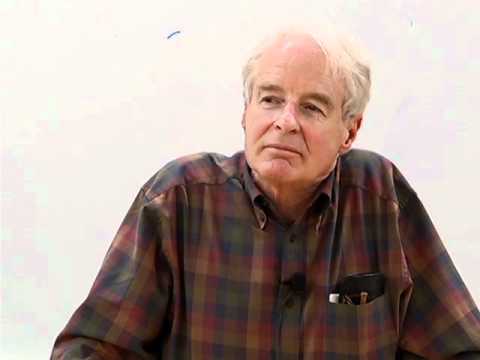
Thursday, February 23, 2012
Time to Question Short Term Perspectives
Sir Martin Rees in his closing comments makes a moving reference to the builders of Ely Cathedral and the way that
despite the harshness of their lives they built a structure of enduring magnificence. He draws a nice contrast between
that aspiration to provide a legacy to future generations despite their relative lack of knowledge about the world and
our current short term approaches to problems. Despite all our scientific knowledge our historical understanding of how
failed policies lead to more hunger and poverty we seem fixated on repeating them and not addressing how we can make the
planet a safer and healthier place for the billions more people who will occupy our world.
Saturday, January 22, 2011
Take a look at Google's NGrams and See if you Can Use it In Your Classroom

Ngrams are a wonderful new invention by Google. I would encourage you to play with
this way to use Google's formidable bank of digitalized books from the 1800 to the present. In the above ngram you can see how the word "global" comes into vogue during the post war period and after a long term decline in use, love justice and empathy are all on a very slight upswing. What to make of these trends is anyone's guess but it could provide a fascinating challenge for students to find out how these words' changing fortunes reflect our changing times. Let me know what you think.
Monday, January 17, 2011
The Military Industrial Complex--Fifty Years On

It is 50 years since President Eisenhower gave his great farewell speech in which he warned of a military industrial complex. The import of the warning in the nationally televised speech that aired on January 17th 1961 was largely ignored, particularly the theme that as Andrew Bacevich points out in this month’s Atlantic magazine was woven into the text that spending on arms was akin to “misappropriation of scarce resources” a kind of theft. “Every gun that is made, every warship that is launched, every rocket fired signifies in the final sense, a theft from those who hunger and are not fed, those who are cold are not clothed.” Any nation that spends to purchase arms is “spending more than mere money.. It is spending the sweat of its laborers, the genius of its scientists, the hopes of its children.” Eisenhower made the first effort any President has done before or since to quantify the cost for ordinary people “The cost of one modern heavy bomber is this: a modern brick school in more than 30 cities..We pay for a single fighter with a half million bushels of wheat. We pay for a single destroyer with new homes that could have housed 8,000 people.”
But the US continued to ignore the warnings. In the 1950s with economic prosperity booming the politicians and the public saw no need to trade off between guns and butter. We seemed to have sleepwalked our way into what Bacevich terms as the “national security state”
That state has such power over us so that despite the need for harsh choices, we are no closer to taking any kind of close look at $700 billion (doubling in the past decade)defense budget and no closer examining the underlying assumptions that dictate that we still need a huge defense build up after the collapse of the Soviet Union and the emergence of asymmetrical war fare. In addition we exceed $80 billion in intelligence spending. Our military outlays are almost the same as all other nations combined. We continue with “threat inflation” as some have termed it to order new bombers and new battleships despite the chronic needs of America’s poorest citizens, the deteriorating infrastructure and the palpable needs to grow a 21st century green economy. Eisenhower wanted the people, the citizens to exercise common sense oversight over the expanding military budget—“Only an alert and knowledgeable citizenry can compel the proper meshing of the huge industrial and military machinery of defense with our peaceful methods and goals, so that security and liberty may prosper together.” We know that military spending does not very much for the economy—investments in schools and hospitals would yield far more in jobs than missile production but 50 years later our wars in Afghanistan and Iraq costing one trillion (at least) with the final cost coming closer to three trillion while the military industrial complex expands we are at a cross roads. Can we develop a debate about the size of the military and cultivate a sense of what our global and American citizenship demands?
Subscribe to:
Posts (Atom)