Sunday, February 28, 2016

Sneak Preview of Chris Rock's Academy Awards Monologue


President Trump how do you all like that one?
So much for President Obama’s hope and change
He is the sort of change that I don’t think Obama was thinking about- a New York billionaire with enough gold fittings in his 757 to feed the population of Haiti for a month.

Good work Obama to have erased all memory of your campaign. Its as if you did not happen
we just went from the Bush to Trump without missing a beat. That healthcare stuff and saving the economy from fat cat predators like Trump--that did not really happen. You being the first black president --well that was kind of statistically interesting but not really that important in the long term march of progress.  We all  took the Kool Aid--now we are really so excited now to have new and improved healthcare, which means that we go back to our familiar Emergency Room doctor and our friends on Wall Street get to pay less taxes. But be grateful that you are not one of the  11 million illegals that will get deported back to Mexico.  We can all feel so much better to be protected from those rapists and thieves now they will be safely put behind that Mexico will pay for. That wall will also be a new tourist destination. A better legacy  than health care or even Trump Tower. And you can trust that Trump will surround himself with the best deal makers that money can buy.  While he is getting Mexico to pay for the wall they are planning how they can get the Saudis  to pay for the health care and Iran to pay for our nuclear weapons and China for our highways and bridges that are in a state of collapse. I mean he is only going to get the best talent.

I cannot wait to make America great again. I can see Chris Christie might get a job in your administration. How about Transportation secretary to make sure roads get closed at the right time for your limo parades down Trump Avenue--I mean Pennsylvania Avenue is such a boring name, we need some exciting upgrades to accompany that Trump Hotel you built down there in DC.  Maybe you can throw in the Lincoln bedroom as an upgrade to some visiting Saudi prince who knows who might come visiting.

I cannot also wait to see who you might pick as your next Supreme Court justice--who might it be--one of your sons? Your sister a federal judge would certainly qualify but we really don’t need so many females on the Supreme Court after all we have more now than at any time in our history and they can say irritating Megan Kelly type things that can upset you sometimes. We cannot have that.

But it will all be great, huge magnificent. Just like Trump University--that great institution of higher learning you built. Just like those Trump University students we will all study your one great book the "Art of the Deal" or was it the art of the scam. We dont need the Department of Education because its a drain on the Treasury. A better idea would be for people to pour their life savings into some scheme that will make them great millionaires or even billionaires just like you  as a result of  turning up to some drafty Holiday Inn Express somewhere and listening to some clown read from your award winning book.

Yes I can see students all over the country learning many patriotic lessons from your life story --
from the bribery investigation in New Jersey during the nineteen-seventies, to allegations that a Mafia-related company helped to build Trump Tower, to your hiring of illegals on your building projects. It will all make us so proud to have you as our next President. Something that will go down in history.

0 

Tuesday, September 22, 2015


Shakespeare and Immigration

I was listening to Sir Ian McKellen who was promoting his new Sherlock Holmes movie on a recent podcast and he ended the interview by quoting from a little known speech from a seldom performed play, Sir Thomas More, that Shakespeare is known to  collaborated on. Known as the "strangers speech" it concerns the 1517 riots against the presence of immigrants in England which were recurring in the 1590s and attracted the censor's pen and the play was never performed despite( according to Stephen Greenblatt's Will in the World)  alterations being made and  new scenes inserted. The strangers speech survived and we know it was written by the bard himself because his handwritten version of it is now in the British Library, classified as "Hand D."

It is a speech to the rabble to quell their anarchic and violent tempers made unruly due to their reaction to an influx of  new refugees from Europe. Although  similar in tone to the speeches about law and order the bard had crafted in numerous plays most notably Troilus and Cressida, it is less abstract, more modern and emotionally harder hitting than anything similar he had previously attempted.  I provide the text below but  McKellen's reading allows a modern ear to tune into its heartfelt power.

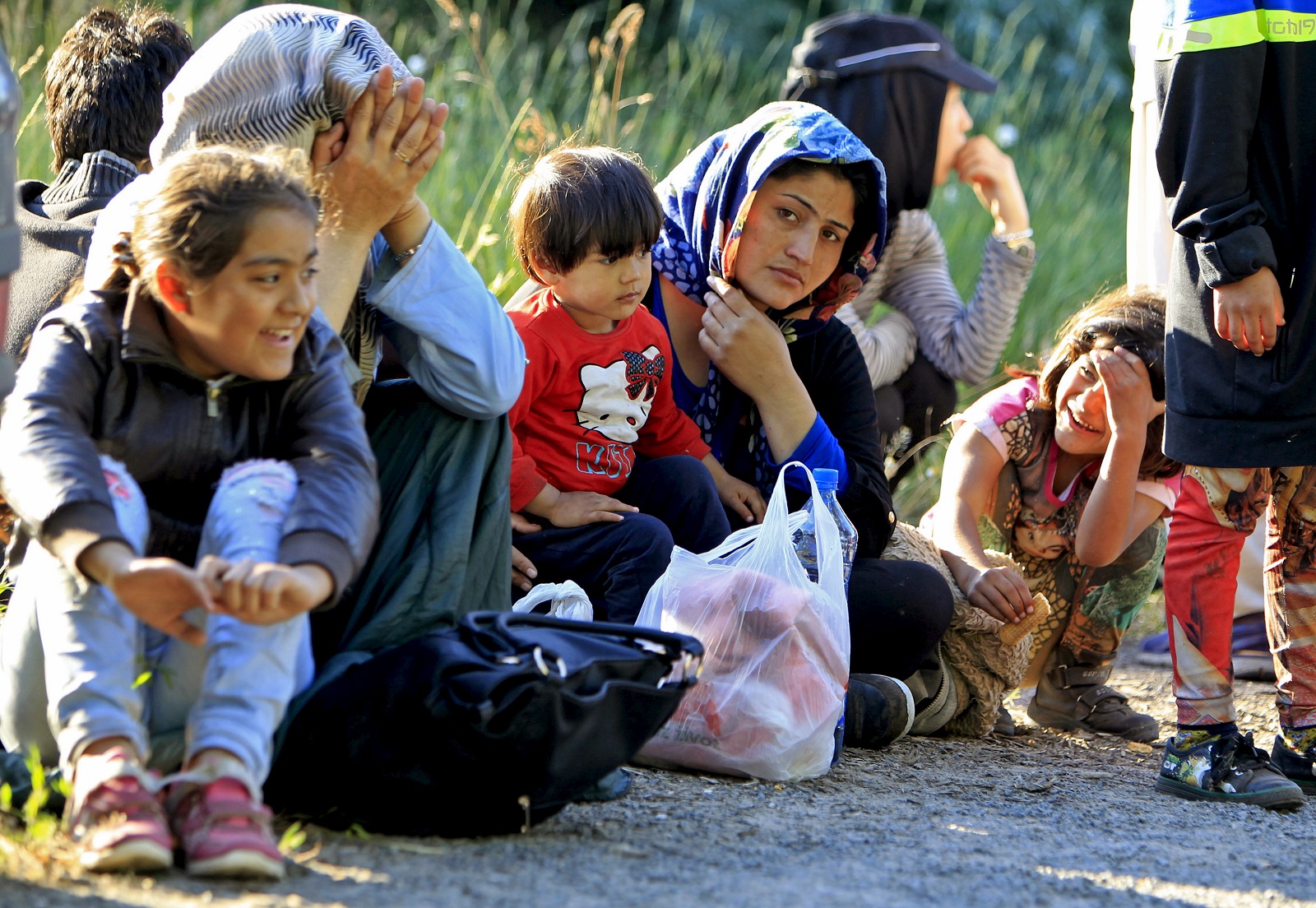
One cannot help when the world is undergoing its immigrant crisis to understand the message--we are all humans. We all deserve dignity. In a similar vein, Immanuel Kant calls the cosmopolitan  right of strangers "not to be treated as an enemy when he arrives in the land of another.” It is Shakespeare at his most political and humane--recognizing that the right is a reciprocal one and constitutes our humanity. As the speech builds towards its crescendo we cannot help recognizing the universality of Shakespeare's "stranger's case" and the  "mountainish inhumanity" that allows us to ignore it.


For to the king God hath his office lent
Of dread, of justice, power and command,
Hath bid him rule, and willed you to obey;
And, to add ampler majesty to this,
He hath not only lent the king his figure,
His throne and sword, but given him his own name,
Calls him a god on earth. What do you, then,
Rising ’gainst him that God himself installs,
But rise against God? What do you to your souls
In doing this? O, desperate as you are,
Wash your foul minds with tears, and those same hands,
That you like rebels lift against the peace,
Lift up for peace, and your unreverent knees,
Make them your feet to kneel to be forgiven!
Tell me but this. What rebel captain,
As mutinies are incident, by his name
Can still the rout? Who will obey a traitor?
Or how can well that proclamation sound,
When there is no addition but a rebel
To qualify a rebel? You’ll put down strangers,
Kill them, cut their throats, possess their houses,
And lead the majesty of law in line,
To slip him like a hound. Say now the king
(As he is clement, if th’ offender mourn)
Should so much come to short of your great trespass
As but to banish you, whether would you go?
What country, by the nature of your error,
Should give you harbor? Go you to France or Flanders,
To any German province, to Spain or Portugal,
Nay, any where that not adheres to England,—
Why, you must needs be strangers. Would you be pleased
To find a nation of such barbarous temper,
That, breaking out in hideous violence,
Would not afford you an abode on earth,
Whet their detested knives against your throats,
Spurn you like dogs, and like as if that God
Owed not nor made not you, nor that the claimants
Were not all appropriate to your comforts,
But chartered unto them, what would you think
To be thus used? This is the strangers’ case;
And this your mountanish inhumanity.


Thursday, January 1, 2015

The Smartest Kids in the World and how They Got That Way, by Amanda Ripley, A Review


Amanda Ripley a former Time reporter used to try to  avoid education stories because they were in a word “soft”--by this she means that they were largely human interest stories that traded on various cliches--well intentioned adults and kids turned into photo opportunities--smiling and silently following authority figures. Evidence that there was anything particularly replicable or important was usually lacking and the result was invariably feel good mush. Ripley’s book, The Smartest Kids in the World is a praiseworthy step in the opposite direction. Ripley  provides a lucid and largely non mushy account of how and why three school systems (Finland, Poland and South Korea) differ by allowing us to see these systems through the eyes of three articulate Americans as they spend a semester in these countries as a foreign exchange students. For anyone who has been put off by the typical faceless data heavy accounts as to how US schools are typically failing when measured against international metrics this book is for you.  In this book we gather a more nuanced view as to how our schools shape up internationally (or at least in comparison with those that typically excel on international comparison tests South Korea, Poland and Finland) by seeing them through the eyes of three American exchange students. The book is a great example of deep reported journalism for a broad audience of readers who would not normally pick up a book about educational policy for light reading but are drawn in by books’ basic conceit, how three US students who spend a semester studying abroad cope with the complexities such markedly different school systems.

Along the way Ripley helps us to learn a lot about the world of educational comparisons in a way that avoids the usual academic jargon. For example, you are introduced to the Pisa test that undergirds all the international testing which is not as you might have first imagined a
a challenge to build a jenga tower but stands for the Program for International Student  Assessment and developed by the OECD (Organization for Economic Cooperation and Development) and not about students solving difficult equations that would fox adults and children alike but rather tests the ability to think creatively.  By taking readers through her own process of preparing and then taking the test itself Ripley leaves us more impressed with the clever way the test really examines whether the student is able to apply critical thinking problem solving and literacy skills to questions that seem on the surface quite simple such as whether an interpretation of some statistics makes sense and to justify their opinion based on the facts they are provided.

Ripley also illuminates the difficult issue of ‘rigor’ a word that is often thrown around in education circles but as you read about the way all the systems discussed in the book treat education comes to mean more than just whether students work hard at school (as it tends to do in the US) but the extent to which all the components of the educational system from teacher training to parental and public expectations converge and support students wrestling with complex ideas.

“it wasn’t that public respect for teachers led to learning, as some American educators claimed after visiting Finland; it was that public respect for learning led to great teaching..one thing led to another. Highly educated teachers also chose material that was more rigorous, and they had the fluency to teach it. Because they were serious people doing hard jobs and everyone knew it they got a lot of autonomy to do their work. That autonomy was another symptom of rigor. Teachers and principals had enough leeway to do their jobs like true professionals. They were accountable for results, but autonomous in their methods.”

Ripley is eloquent about why rigor matters and why educational policy in the US often interferes with its attainment because it invariably wants to eat away at teachers’ autonomy and prescribe outcomes that should be in the hands of professionals not bureaucrats. The ‘education superpowers’ (as she refers to the countries she studies) had a ‘clarity of purpose’ as to what counted that translated down to the students and their families. The systems enjoyed the synergy that comes from families and schools reinforcing students motivation to learn and do well at school. All students in these countries knew how and why education mattered to their lives but as Ripley sadly opines in many US schools “the priorities were muddled beyond recognition.” One of the chief muddling factors was the oversized space that sports had in American students lives. While only a minority of American students actually played competitive sports they played an outsize role in budgets and time devoted to them. Other countries cared about sports but they were typically organized by parents, community centers or clubs outside of school time. The time and the amount spent on sports in the US all sent the message that was different to the one in the other countries studied that “what mattered, what really led to greatness--had little to do with what happened in the classroom. That lack of drive made the teachers’ jobs harder, undercutting the entire equation.”

The book is worth reading just for the sections on rigor and why and how it makes a difference for disadvantaged students just as much for advantaged ones but there are so many other things to enjoy about the book and more importantly to reflect on. The Korean bargain to place far too much emphasis on testing so that school and cramming colleges turned education into a joyless enterprise should serve as a warning signal to all test minded enthusiasts. However, the opposite was also true--”moon bounce schools” (as Ripley refers to many US schools where improving self esteem rather than achievement were the end goals) produced kids who had no experience of what it meant to fail, and only later would “discover that they had been tricked” and had essentially wasted their time and would have to struggle if they were to obtain even a minimum wage job. Although politicians like Bush and Obama have through their various signature initiatives to inject rigor from the outside into faltering schools through new kinds of testing regimes, Ripley views them as promising more than they could deliver “lifting the floor but not the ceiling.” For a more complete approach one that raised the standards for all students people had to believe in and demand rigor as a result of recognizing why it mattered it economically. The author is persuasive on this point down as she recounts that all three of the countries studied passed reforms that propelled them to the top of the Pisa League Tables as a result of serious threats to their countries’ living standards. Part of the reason the US has resisted adding more rigor to the school experience has been the general preference of some sectors of the society to continue to deny the connection between schooling and economic success. Ripley uses the example of Oklahoma’s resistance to any form of rigorous standards or assessments as something of a test case. The repeated efforts by some Oklahoma lawmakers to defeat a simple graduation test as well as more recently the Common Core make for some bitter if  humorous reading as the old canard of federal control over local standards was wheeled out by a series of demagogic politicians. However, despite examples like Oklahoma Ripley seems encouraged that Americans are beginning to get it and to “feel the urgency, the unsettling proximity of change and competition. The truth is that US is a difficult country to compare internationally as it contains a wide amount of diversity--as she illustrates by one map that looks at states as if they were PISA countries--some states like Texas compare to Poland and many Northeastern states in particular compare well to some top PISA performers. A charter school chain like BASIS (operating in Washington DC and Arizona) can produce students who outscore the average student in Finland, Korea and Poland or even Shanghai the region that ranked first in the world on PISA in 2009. Ripley maintains the issue is one of leadership. Rather than allow politicians to  play with education to indulge in their own pet ideas that might include teacher bashing or federal control, leaders from all sectors including from business and universities need to help build the consensus that what matters is rigor that starts with high standards, accountability for outcomes and market driven compensation for talented teachers. Read this book and then insist that your friends, family and most important your political representatives also read it!


Friday, June 27, 2014

Are We at an Inflection Point for a New Kind of Social Impact Philanthropy?


One of the silver linings of a deadlocked congress is that the President has been forced to come up with more creative ways to stay relevant. Rather than just convening the White House conference that ends with a commission report that may or may not make the 24 hour news cycle, the administration has decided that much more good can be done by leveraging private sector philanthropy in connection with governmental actions (such as  regulatory changes) that don’t need the blessing of Congress. Basically  it all goes back to the idea that companies can get rich and  do the right thing and that government should be there to support what they do. This message ever since the G-8 Social Impact investment forum in London last year seriously endorsed a new more progressive minded approach to aligning capital formation with solving large social and economic  issues culminated in an announcement from the White House this week involving  twenty private-sector investors, including the McKnight, Ford, and MacArthur foundations to commit  a collective $1.5 billion dollars to a public private partnership. The  initiative’s goals include delivering “affordable housing and healthcare for low-income communities, carbon footprint reductions for some of the America’s least energy efficient buildings, fresh produce to food deserts, financial services and education to help lift millions out of poverty.”

All of this activity has generated some discussion as to whether we are now at an inflection point here in the development of a new kind of philanthropy? For example, Jean Case, CEO of the Case Foundation took to the Huffington Post to proclaim so “A new day has dawned. Impact investing offers a unique opportunity to "invite business in" - not limiting their role to that of their foundations or social responsibility programs, but rather enabling and encouraging them to use their core areas of expertise, or their established products and services in these efforts.” Case gives the example of Warby Parker, “using fashion and consumer demand to bring eyeglasses to the developing world at scale.”  Why are philanthropies needed when their funding could easily be drowned out by the private sector? For several reasons, philanthropies can invest in that part of the project where the risk of not getting a high enough rate of return (building affordable housing for example) would preclude (based on their fiduciary duty)  a private sector endowment manager from investing. They might also according to the influential report, Private Capital, Public Good:  How Smart Federal Policy Can Galvanize Impact Investing — and Why It’s Urgent by the US Advisory Board  use their own non charitable investments which can all count towards their mandated annual five percent payout. The investments will be watched carefully for impact and if the indicators suggest positive synergies we can expect that this sector with government help will grow and the old divisions between governmental, corporate and private sector philanthropy will for start to fade as a new urgency enters the minds of the global financial elite to save the planet. This shift in thinking cannot come a moment too soon as the Millennials are expected to receive a transfer of $41 trillion in the coming decades and will want to continue to align their investment priorities with their values.

Sunday, January 26, 2014

Future of Climate Change


Amy Luers
We are now accepting that the prospects of climate reform are quite bleak.  But the effects of it are quite real, as Luers and Skar write,  the effects of climate change are now real,

"Populations across the globe are beginning to perceive the real or apparent effects of a changing climate. The climate threat is increasingly equated with present-day devastation wrought by storms, floods, wildfires, droughts, and heat waves, rather than abstract catastrophic threats such as a collapse of the West Antarctic ice sheet or the sudden shutdown of the thermohaline ocean circulation (dramatized in the 2004 science-fiction thriller The Day After Tomorrow). "

These events have forced the media to see climate change, "as the magnifying lens through which we view all other problems: food and water, national security, human health, and poverty." As a result "the climate change narrative has changed. A greater number and diversity of actors are aware of and involved in addressing climate change; yet each is motivated by different concerns, driven by different values, and focused on different outcomes. For many, a rise of average global surface temperatures of two degrees Celsius is not a clear line between the acceptable and unacceptable impacts of climate; we are experiencing unacceptable affects from climate today."

But as the authors write while the narrative may have changed  "the framework originally set in motion in 1992" has not.  The authors argue that "It is time to restructure policy discussions of the climate problem from a simple pollution problem to a more complex risk-management problem. This will mean shifting the goal from averting a global catastrophe to minimizing global collective suffering. This will require: taking on the climate threat as a continuum of risks from variability to change; no longer debating whether any given weather event was the result of climate change; recognizing that stakeholders hold different values and risk perceptions; and addressing climate mitigation and adaptation as truly integrated and equal approaches to managing climate risks. By restructuring the climate challenge as minimizing collective suffering, we may open up new opportunities to address the multiple facets of the systemic risks posed by climate."

It sounds like a more productive approach. Rather than confronting the climate change deniers who may not look at the same facts the same way we could find more opportunities to as the authors challenge us to do, to "minimize  global collective suffering." 

Sunday, December 22, 2013

Signs of Hope at the End of 2013

As we close out 2013 a remarkable thing happened, Peggy Noonan, former Reagan speechwriter, Wall Street Journal opinion writer and Republican darling tells the startling truth about what might be passing through the minds of the world's thinking billionaires. While many  dream of ever bigger houses and yachts some worry about the market continuing to rise. Noonan overheard a New York billionaire say these unlikely words,   "I hate it when the market goes up. Every time I hear the stock market went up I know the guillotines are coming closer."  Noonan reflects that self-made, broadly accomplished was concerned that the gap between the ever richer haves and the increasingly poverty line and below have nots "has become too extreme, too dramatic, and static," and "fears it will eventually tear the country apart and give rise to policies that are bitter and punishing, not helpful and broadening." What is arresting apart from the stark choice of imagery is the fact that this commentary is published on capitalism's flagship newspaper, the Wall Street Journal. There maybe some hope that the financial and political captains of the country (more or less the same people) maybe having second thoughts about the increasing unfairness of a system that keeps rewarding those with the wealth and will think again about continuing to fray the  safety net that keeps millions of people from destitution. Liberals who propound such views are usually vilified by the right wing media machine as well "liberals" who know nothing about the need to run profitable businesses or some such tired put down,  but they are in reality capitalists best friend, trying to make an inherently unequal system slightly more humane and by extension less unstable. Thus for example initiatives such as passing higher cost of living related minimum wage laws are designed to keep the system from not breaking down so completely that families cannot get properly fed and clothed and people cannot afford to live in dignity.  Obama with nothing left to run for but a legacy as a change agent to protect, should be dedicating his presidency to closing the wealth gap.

Monday, December 2, 2013

Global Education At A Crossroads

Since the 1970s, there has been a long struggle to have global education accepted as part of the curriculum and as a subject for serious study. Since 9/11, despite the upshot in interest all things global, the states and the federal government have lacked sustained interest to push for more global education in the curriculum.
In 2008 the standards of only two states, Maryland and Mississippi, contained the term “global citizenship.” Remarkably, the Common Core standards pay only a glancing attention to global issues. Maryland was the only state to receive “Race to the Top” funding that included international education and global citizenship in 2011.
Generally, what has occurred over the half century that spans the term’s first use in the 1970s until today is an increased number of teachers who are experimenting with making their classrooms more global -- but no commensurate increase in the number of schools or school districts that could be termed fully global in nature. Nowadays, when schools or districts reference global issues, it is often done in the context of promoting something referred to as “global competence” or even more nebulously "21st century skills." The terms sound appealing, particularly to the business community that sees both as embracing the need for workers equipped with both foreign language and STEM skills. But it strips out the core meaning why many of us first got involved with global education movement: the need for students to truly understand people from other cultures.
To do this effectivelyas much of the research since Hanvey wrote his masterful essay, “An attainable global perspective,” bears out, is to collaborate with people from other parts of the world. Following the growing sophistication of online tools such as Skype and services such as iEARN and ePals, these approaches are now more widely available but to tend to require a deeper, longer-term commitment on behalf of teachers than many of them can nowadays afford to give. Such teachers are in danger of becoming marginalized, as classroom time is ever more taken up with teaching only what is measurable and they find alack of support for the more difficult to quantify cultural skills that students only learn through such longer term collaborative efforts. As a result of these developments, the global education movement faces an uncertain future.
For global education to grow as a field and not just survive, individual teachers who care about creating the next generation of world-minded students need to collaborate together through social networks or forums such as the global education conference affords to make clear their core principles. They need to work with their colleagues to help their entire schools become global, with sustained partnerships that help enrich the curriculum across disciplines and grade levels. To make progress we will need to extend and expand our discussions from beyond our fellow “true believers” to include our fellow teachers and school leaders as well as parents and community leaders. The field will need to examine areas where it can have greatest impact. Working towards an aspirational goal of creating global 21st-century citizens will require entire schools to develop partnerships with counterpart schools around the globe that can be sustained -- so that when one globally minded teacher leaves, the entire program does not then disappear.
For this type of vision to be sustainable, we will also need university partners who can evaluate the harder-to-measure metrics connected with what it means to move from an awareness of different cultural perspectives to a willingness to act as a global citizen and provide the all important preservice and inservice professional development that is today so noticeably lacking.
Activities such as those during Connected Educator Month and the Global Education conference are a start in the right direction.