Wednesday, December 16, 2009

The Growing Chasm-America's Elites and Global Awareness


As the end of the first decade of the 21st century approaches--one kind of organizing theme that is going through my head at the moment is the gulf
that opened up more visibly than ever before --between the elites who basically run things and the rest of us.

Of course there have always been elites--and there has always been a gap between them--the question is why is the gap so wide today? The gulf started opening up quite rapidly after 9/11 when our President took the moment of great national unity and saw it as an opportunity to strike Iraq and "remake" the Middle East using the pretext of Iraq having WMD.

When shoddy evidence was used by Blair's government and by the bullied by VP Cheney and the CIA to justify the war was the result. The next major gulf was the refusal to acknowledge that fighting two wars would require fiscal restraint not fiscal excess--in the form of large tax give aways benefiting the rich and deregulated stock markets. A third issue was the inability by both governmental and corporate leaders to look beyond either the next election year or next quarter--in the case of the auto industry with near fatal consequences. Detroits' fatal attraction to SUVs led to systemic failure added and abetted by a government unable to provide leadership in the area of energy policy or health care which became a crushing burden on the big three's ability to compete overseas. President Obama's election promised to change all this--but there were a series of unexplained retreats from reality:

Despite his strong stand on the need to support middle class families-- Huge bailouts to banks and institutions like AIG that basically gambled away money they did not have without any consequences--while unemployment rose dramatically to the point where it is reaching 12% to 15% in many parts of the country.

Despite a pledge to end lobbyists control of the policy agendathe same big pharma control of the health care debate --see Dana Milbank's brilliant skewering in the Washington Post today of our representatives who should be wearing NASCAR like sponsorship badges.

Despite all the brave words on climate change --No hint of a gas tax or real possibility that we could do very much to reduce global warming through either a cap and trade bill or a treaty.


Meyerson points to the nub of the issue when he writes in today's Washington Post about the way that "America's economic elites.. thrived on the financialization and globalization of the economy that have caused the incomes of the vast majority of their fellow Americans to stagnate or decline. The insecurity that haunts their compatriots is alien to them. Fully 85 percent of Americans in that CFR-sponsored poll said that protecting U.S. jobs should be a top foreign policy priority, but when the pollsters asked that question of the council's own members, just 21 percent said that protecting American jobs should be a top concern."

The problem lies deeper than the failure of elites to understand the suffering of their fellow Americans--many have never bothered to recognize that the 21st century requires a differnt kind of understanding and politics from the 20th.
In the 20th it was still possible to argue that what was good for GM's balance sheet was good for the US and the world. We could also argue that elites and the rest of us benefited pretty uniformly from globalization in the 20th century. Elites have been slower to grasp that there are systematic adverse consequences to globalization in the 21st which can involve entire communities dependent on one kind of manufacturing from being decimated. They have been slow to realize that we need to expand rather than reduce the safety net as those at the top end of the income scale are disproportinately benefited. The consequences of globalization and global warming on emerging countries also has been less well understood. Instead the elites have played into the media's bias for focusing on issues that distract--hence the continued parade of misbehaving celebrities and wedge issues such as gay marriage and abortion.

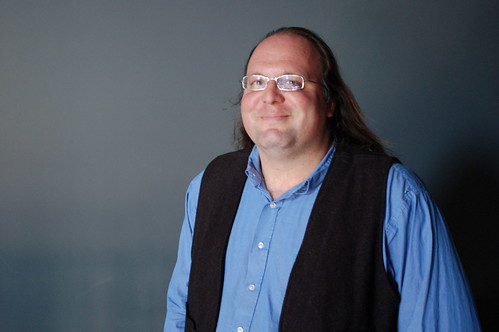
It was amazing given all this that candidate Obama with his serious and nuanced message could break through the media fog and become President Obama. Now he needs all our help in assisting us all to realize that we all have to go to school concerning the key global issues. None of us can afford to duck our responsibilities to learn that simply changing lightbulbs or driving a hybrid or buying a green product will save the planet. We have to better understand who wins and who loses in the global talent race and why. We have to understand such things as why the current climate talks in Copenhagen are according to the latest AP report "deadlocked" and are being disrupted. See photograph at the top of this blog. In truth --we all have to ascend the steep learning curve if we are to become more successful in the next decade. That is our role and our mission should we choose to take it--we are all global educators now!

Tuesday, November 17, 2009

Cosmopolitianism --A Must Read Introduction to a Vital 21st Century Issue


I am grateful to Professor Fernando Reimers for recommending Cosmopolitianism: Ethics in a World of Strangers by Kwame Anthony Appiah. Appiah (the Laurence S Rockefeller Professor of Philosophy and the Center for Human Values at Princeton University)writes in an urbane introduction to the issues multiculturalism poses for our society and should be must reading for all those who want to really understand the complexity of our new century. After reading this book we might all be able to agree (to paraphrase what someone famously said about Keynes) that we are all cosmopolitian (ists) now. No one can truly escape into their own monocultural island --our cities, our media and most important our language and culture are infused with layer upon layer of global cultures whether we are aware of them or not. Appiah begins by examining the root meanings of cosmopolitianism--

"A citizen--a polites--belonged to a particular polis, a city to which he or she owed loyalty. The cosmos referred to the world, not in the sense of the earth but in the sense of the universe. Talk of cosmopolitianism originally signaled, then a rejection of the conventional view that every civilized person belonged to a community among communities."

Appiah's easy non academic style helps you understand the role of the Enlightenment thinkers such as Wieland--(once called the German Voltaire Appiah adds) who wrote
"Cosmopolitans..regard all the people of the earth as so many branches of a single family, and the universe as a state, of which they, with innumerable other than rational beings, are citizens, are citizens, promoting together under the general laws of nature the perfection of the whole, while each in his own fashion is busy about his own well-being."

Appiah's learning is worn lightly as he answers the all important question --what does it mean to hold the view that we are citizens of the world? What happens to local allegiances--for Virginia Woolf it meant--"freedom from unreal loyalties" and Leo Tolstoy wrote about the "stupidity of patriotism"--on the opposite side of the equation are people like Hitler and Stalin who are deep foes of cosmpolitianism and we all know how that ended up. Appiah's huge store of reading helps him navigate through the issue of loyalties which lies at the heart of the question. George Eliot's creation of Daniel Deronda-the very English gentleman who discovers his Jewish heritage only as an adult--explains his interest in studying his heritage in these terms, "I want to be an Englishman, but I want to understand other points of view. And I want to get rid of the a merely English attitude in studies."

The issue comes down to self definition and how we claim it--we have to be open to the idea that our cultural background creates a way we can connect with others--Eliot talks of the "closer fellowship that makes sympathy practical."

And this is just the introduction! The cluster of questions Appiah considers are truly wide ranging -but often remain invisible in debate--questions such "as what we owe strangers by virtue of our shared humanity?, can culture be "owned" ?

Appiah's essential model for negotiating all these points is a conversation--between people from different places and cultures--there are no absolutes but there are some places where people can meet--agree and discuss--that is the realm we can all in this globally connected world participate in.

As a philosopher he can be skilled with applying some important distinctions--so for example when we talk about objective values we are really talking about desired values --some of which depend on certain facts--he gives the example of universal vaccination as being a value --but we are often prepared to give this value up when the disease has been eliminated. Where we often go astray Appiah argues is where we view an individual's moral vocabulary as belonging to one individual--all the important values-such as kindness, cruelty are public and shared across cultures. It is first and foremost evaluative language we are using--a way of communicating to each other our preferences--if your values were not shared in language --there would be no way we could refer to them. The reason why values are important in our society is that they allow us to get things done together--we appeal to those values in order to act in the public forum--whether it is building a road, going to the moon, or making peace. Our stories that we share embody our values and certain stories are more important than others in our national culture because they enshrine some key values. So one of the purposes of studying a foreign language and reading books in translation is to appreciate the nuances of other people's values.

Not all chapters are discursive essays--some are personal meditations based on growing up in Ghana and the ways that the culture and beliefs shape someone so that conversation sometimes becomes problematic. The author gives the example of medicine and how the conversation between someone who believes in witchcraft to accept the findings of modern medicine. Why should they believe in viruses--that you cannot see? Just because you said so? You can say that you can predict who can get well but not who will get sick. In the end you have to appeal to a community of people who can test the evidence that goes beyond the anectdotal and subjective.

There are insights all along the way--for example the independence movements in Africa and elsewhere that brought to an end colonial rule were arguments about values--not African values per se --but values embodied in the rhetoric that had
guided the Allies in their conflict with the Axis powers--"It was a conflict of interests couched in terms of the same values."

Important points are made about so called cultural purity and cultural contamination--we see so many examples of ethnic communities within hetrogeneous cultures choosing to live within their own cultural borders--but as Appiah so eloquently argues--"cultural purity is an oxymoron"--multiculturalism is in some shape or form in all our lives--in the Middle East, in China, in Ghana and in our own western world. The entire history of culture has been related to mixing one cultural strain with another--from the Roman through to the Alexanderian and British empires to the American century--cultures are continually reinterpreted and reinvented. Intolerance for others is bred of universalistic fundamentalist creeds whether they be Islamic or Christian or Jewish can as we know all too well lead to dangerous consequences--however as Appiah reminds us the truly toxic aspects of this are not so much in terms of those beliefs but their fear and sometimes prohibition of conversation. Without conversation they can extend their belief that "not everyone matters" and other equally savage ideas and not owe anyone a justification as to why. They don't want to be drawn into explaining precisely because they don't want to have to justify themselves or their beliefs to others--because they know that their values are not ultimately defensible. Reason is at the center of it all--"come let us reason together" should be the motto of every civilized person--it offers a ground for your thinking and my thinking.

In terms of the central question--what are our obligations to others--Appiah's answer is to be common sensical--it is to do "our fair share"--we cannot be required to do more. But what is our "fair share"? How do we deal with the fact that so many people are not doing their fair share? He discusses this and other issues--such as the paradox that one of the world's greatest capitalists is providing billions to help eradicate preventable diseases around the globe and our economic system allows the average cow to live on a $2.50 a day subsidy when 3 billion people live on less than $2 dollars a day. Appiah points out that Jeffrey Sachs has argued that we can eradicate extreme poverty for about $150 billion a year for 20 years. Clearly we can do better, as Appiah argues it is a "demand of simple morality" and we can also agree with him that this end might be more achievable "if we made civilization more cosmopolitan"

Tuesday, November 3, 2009

Cultural Bridge Builders


Ethan Zuckerman is a man to get to know. He has been a fellow at the Berkman Center at Harvard University since January, 2003 and writes about how technology impacts the developing world. He is an original thinker who can clearly deliver an effective presentation and make his work accessible to large numbers of people. His recent brilliant talk talk at the Business Inovation Factory--and embedded below is about the importance of cultural bridge building.

The "TED style" lecture is a highly thought provoking exploration as to how we need to learn about other cultures not through learning them as if we were tourists--and referring to a phrase book or guide but through those who are rooted in one culture but have the ability and the generosity to reach out to those who want to learn the new culture. Zuckerman gives examples from his own visit to Ghana and his need for a cultural roadmap to how Paul Simon's interest in South African music got started. Interesting ideas of how we learn to trust others from very different backgrounds through playing video games with them. This is a video that is both entertaining and educational--and worth a series of conversations about how we might apply the ideas to our global classrooms.

Wednesday, October 28, 2009

International Education Week--Calling all Global Teachers


Are you a global educator? Do you use technology to connect with classrooms around the world? If so we want to hear from you. The State Department and the Department of Education are co-sponsoring International Education Week --from November 16-20
and we (ISTE included) want to compile a list of educators doing truly amazing things that we can feature it and student work on relevant websites and for the benefit of media outlets. Email me at myglobalpicture@gmail.com or contact me on Facebook on Global Education: Using Technology to Bring the World to Your Students.

Wednesday, October 21, 2009

Can We Predict a World Future? How do We Make It Come out OK?


If you have not heard of Bruce Bueno de Mesquita you need to--he is a futurologist--with a 90% track record of predicting international events. He consults with the CIA and world governments. We need to pay attention to his scientific analysis of issues.
He predicts for example that the climate change conference occuring soon in Copenhagen will come to naught. We will not do anything to cut back on our emissions because the politicians are afraid of taking the painful decisions to profoundly change our comfortable lifestyles. He is on the other hand optimistic about Iran at least as far as their decision to go fully nuclear and prepare weapons grade uranium. The science he relies on is game theory--a branch of math that first assumes that all players are rational and that they make self interested choices.

His analysis of the power structure in Iran makes him believe that there is consensus only on one item--the need to demonstrate their nationalism in some large symbolic way but not go to the lengths of isolating themselves from the International community and risking further domestic political instability.

Can any of this type of analysis be used in schools? One interesting exercise that comes to mind is asking students to really role play the countries that will need to be party to the new Climate treaty. In the last Kyoto treaty--many countries were able to look good before world public opinion ---and signed the treaty--knowing full well that there were no ways to hold them accountable if they did not deliver on their desire to cut carbon emissions--and so the treaty ended up being a large symbolic failure. Scientists have made the failure clear that Kyoto has done nothing so far to stem carbon emissions. The question is can the world media pay attention long enough to make sure that the countries that sign various goal statements are forced to make good on their pledges? Do we have the attention span to read the details and participate as "global citizens"? Can teachers explain to their students what the stakes are in Copenhagen this year and why it matters? In other words can we, first as a US community and second as a world community put enough pressure on our leaders to forego naked self interest issues and deliver something for the people who will be alive in the future? The great weakness of democracies is their inability to plan for long term results--can we be rational enough to know that now we have to place a higher value on our long term futures?


Check out his TED talk below:


Thursday, October 15, 2009

President Obama's Acceptance of the Nobel Peace Prize


There seems a general consensus that the Nobel Prize the President received was a bit premature. It was offered more in a spirit of hope that the new direction for American foreign policy are worthy of recognition--and that the courage that the President displayed to oppose the Iraq war, close Guantánamo, and give his historic Cairo speech
are worthy enough. In this respect --it was given equally as a reward to the US people for having the nerve to elect him as much as it was given to the President as a personal reward. Tom Brokaw's op ed in the Washington Post today reflects this general point.

As Brokaw argues, "what better way for him to respond than to share this distinguished prize with those who have been doing just that without sufficient recognition?" Brokaw would have a number of luminaries join him on the plane to Oslo--among the dignitaries he selects are

"Greg Mortenson, the author of "Three Cups of Tea," who has spent years working for education and literacy (especially for girls) in mountainous parts of Pakistan and Afghanistan. Field representatives from organizations such as Refugees International, the International Rescue Committee (where I am a volunteer overseer), CARE, Save the Children and other groups doing the hard work of caring for the victims of war. Bill and Melinda Gates should be in his delegation, as well as Republican Sam Brownback, the senator from Kansas, who's been a tireless advocate of greater U.S. involvement to stop the genocide in Sudan."

We could all add to the list--but that is a good start--the limelight and the prize should be shared and widely celebrated. Perhaps Tom Brokaw should also be on the trip and do interviews with the entire cast so that the message of a new more globally aware America can really sink in back home as well.

Thursday, October 8, 2009

Going Green More Complex than it Appears: The Key is Awareness


Daniel Goleman, the author of the bestseller Emotional Intelligence, has authored a new book entitled Ecological Intelligence: How Knowing the Hidden Impacts of What We Buy Can Change Everything.. The premise of the book is essentially that we need a lot more information about the right green choices than would first appear. It is not enough in other words, Goleman convincingly argues, to stick a "green label" on something and think you are doing good by the planet. Did you know for example:
* It takes more energy and pollutes more water to make paper bags than plastic ones?
* Even recycled glass jars create serious pollution and takes 659 different ingredients to produce?
* Organic T-Shirts made of cotton also cause their share of harm--it takes 2,700 gallons of water to produce one cotton T-Shirt, (the Aral Sea evaporated into desert largely because of the prodigious thirst of surrounding cotton farmers). If the organic T-Shirt is dyed it then causes a number of other toxic chemicals to be consumed because cotton resists absorbing dye and those chemicals end up in rivers.
*Buy a bag of crisps--its carbon footprint is 75 grams--(by jumbo jet flying from Frankfurt to New York City emits 713,000 grams per person.

Only 28% of food products surveyed out of 25,500 by a reputable group of nutritionists received a commendation of "healthy choice." Most foods were too salt and sugar loadded to receive any stars.

Basically, as Goleman says "green products" are overhyped and the idea that there can be some 100% green products is a complete PR hallucination--often a carefully constructed mirage in fact. Goleman makes a passionate case as to why we need far greater transparency in the green marketplace. He gives an example of what could happen. In 2007 HSBC in the UK ran a promotion to recruit business from college students by offering free checking and no fees for overdrafts.
Then someone at HSBC cancelled the policy deciding it was too expensive. Wes Streeting a VP at the Cambridge University Student Union stated a facebook campaign against the "rip off" and thousands of students joined the protest--needless to say HSBC changed their policy back within weeks.

It seems from Goleman's research that while 25% of consumers don't care about what global havoc was caused in a product's production--10% do care and will go out of their way to shop for a more ethical item. Roughly 2/3rds of shoppers are in the middle--they care but want the decision to be easy--these are the true swing voters.
Goleman wants the decision making of these consumers in the middle to be easier.

Goleman wants to see companies become more responsible but they will only move in this direction with public pressure. We are about to enter that period--with the "dawning of ecological transparency in the marketplace."

The companies that will survive in this new era will be those capable of doing continous R&D. But we have to be ever careful about the tendency for companies to engage in "green washing" and for empty PR gestures. Robert Reich, former Labor Secretary is skeptical that companies will sacrifice profit for looking good in the public eye and favors stronger regulation. Goleman is not so sure that regulations will achieve the victories that we need now and argues that "radical transparency" is the way out of the dilemma--"making goodness pay."

Goleman suggests that "an informational fix" is needed to make consumers from Bejing to Berlin aware of the hidden choices they are making--and so "changing the rules of the game for business." It is an optimistic thesis and one I wish I could believe in. What is missing for me from Goleman's argument are the corporate forces around that have a vested interest in keeping us content with the status quo.

For me what would make this book even more valuable is a focus of the choices others can make--particularly journaliss in reporting stories that provide a fuller context related to business news as they touch ecological and globalization issues and the role that educators can play. Surely students could be charged with doing some of this investigation into the products they consume as teachers help them to become more globally aware. This is not preaching to them--they just have a right to use their critical intelligence and the tools they have --and the disciplines they are discovering (math, geography, science) to bring their lessons alive and find a personal connection to what they are studying-rather than believe that the world exists as a remote object for study removed from their own lives and the consequences of the decisions they and their families make. The state of the planet is a critical one--surely we must martial all available resources to assist in the solution. The marketplace --transparent or not will not take solve this problem as we found out to our cost last year with the global economic meltdown--there is a place for regulation, education and the media to be far more responsible about doing right by the world they share with all of us than they have done in the past.